
Successful “Wet Start-Up” of Demo 5 in Stuttgart
Over the last few months, project partners RPTU University of Kaiserslautern-Landau, AKUT, Stadtentwässerung Stuttgart (SES) and University of Innsbruck (UIBK) have successfully established DECIRE-WATER’s Demo Site 5 in Stuttgart, Germany.
Marking a major milestone for the project, the system has been fully constructed, connected, and officially started up by mid-2026.
This demo setup is the direct result of the close collaboration among two academic institutions (RPTU and UIBK), the engineering and planning firm AKUT, as well as the local wastewater utility in Stuttgart, SES. Together, the partners orchestrated the planning, design, and implementation phases, successfully transitioning the system from a conceptual design into an operational, hybrid technical/nature-based reality.


Demonstrating Sewer Mining for Decentralised Irrigation Reuse
As climate change accelerates, urban areas face prolonged periods of droughts, driving an urgent need for sustainable, climate-resilient water management solutions.
Our demo site in Germany addresses these critical challenges by demonstrating how modular solutions can treat sewer wastewater (“sewer mining”) for local irrigation reuse.
This demonstration site features different mechanical pretreatments, novel constructed wetlands for wastewater treatment, and a disinfection system, playing a critical role in achieving DECIRE-WATER’s broader objective: proving that decentralised solutions can secure urban water resources while integrating into existing centralised wastewater infrastructure.
From Design to Operation: Bringing Demo Site 5 to Life
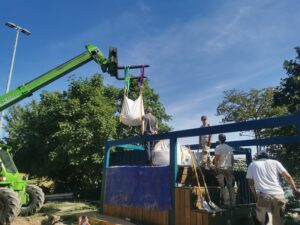
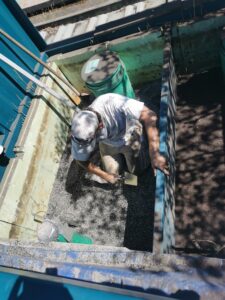
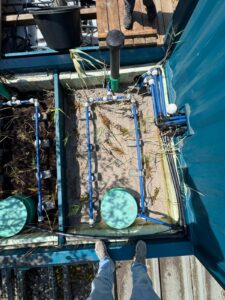
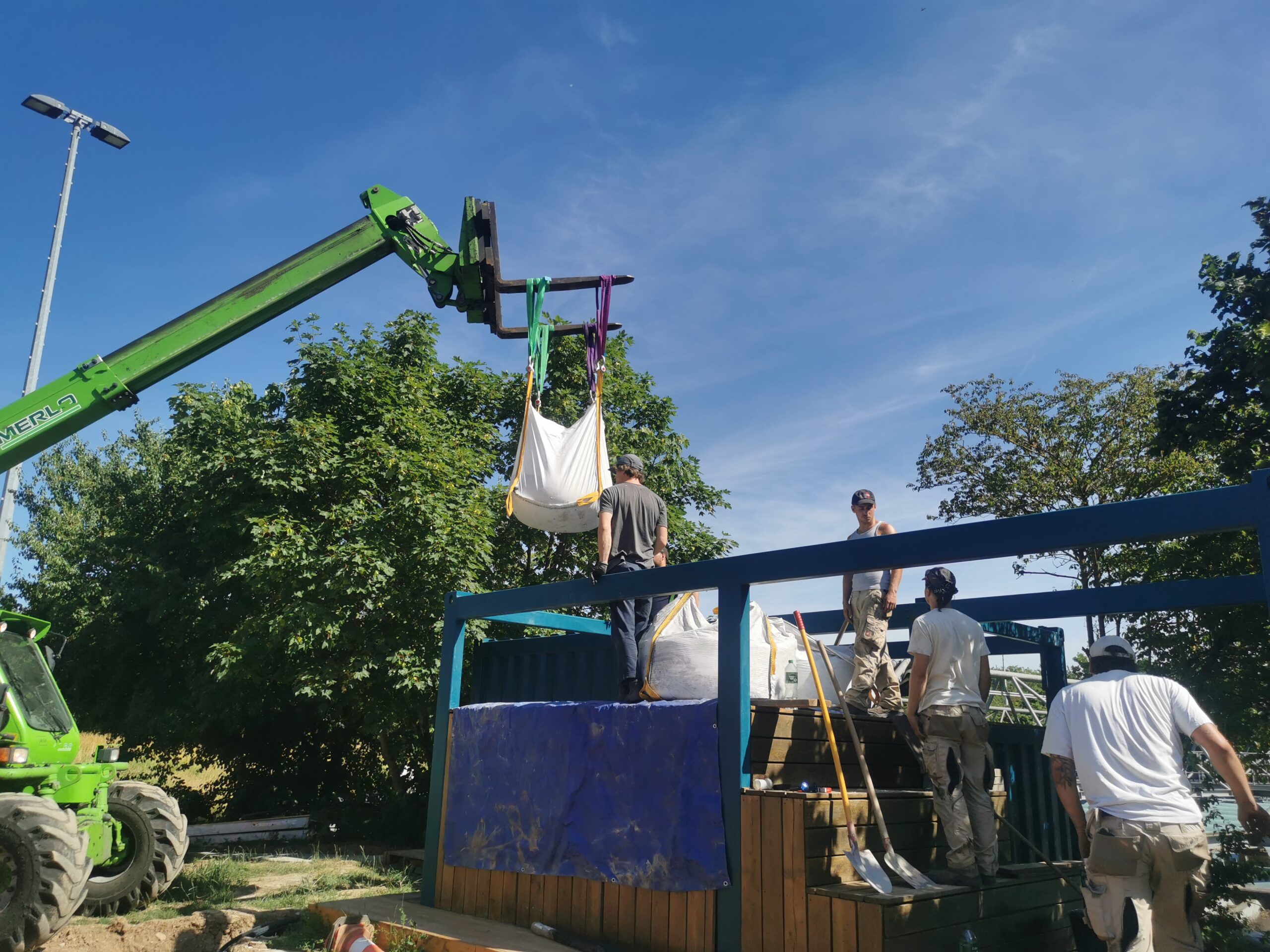
The past few months have seen intense activity on-site to bring the hybrid technical/nature-based demo site to life. Key activities included setting up three different pretreatment units, laying over 200 meters of piping, and filling two constructed wetland compartments with novel filter media. Additionally, the team installed the UV disinfection system, the control and automation unit, a rainwater cistern, and ivy facades alongside an automated irrigation.
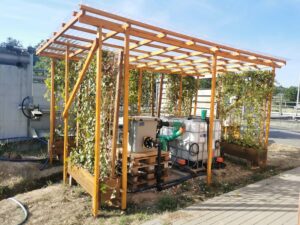
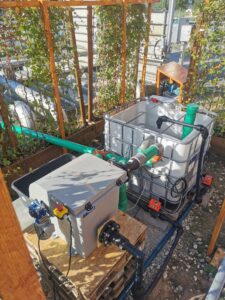
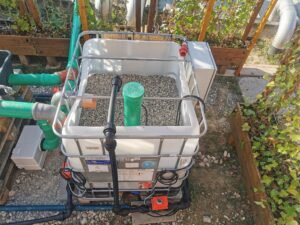


Following the technical installation, both constructed wetlands were planted with Phragmites australis (common reed) that drive the natural filtration processes. The team achieved then the “wet start-up,” introducing water into the system for the first time to test hydraulic routing, flow rates, and connection integrity.
Operational Status and Future Research Activities
Following the successful wet start-up, the system is now operational. The vegetation is currently acclimating, the filter media is settling, and the vital microbiological processes are establishing.
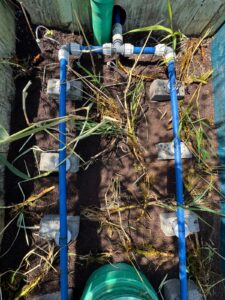
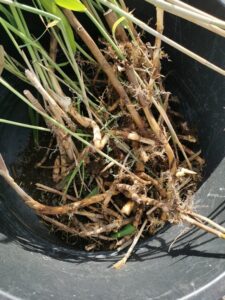


Next, the partners will begin routine monitoring as mechanically pretreated wastewater is introduced. RPTU will track system performance and investigate different operational strategies to ensure safe water reuse, focusing, among others, on the removal of pathogens, antibiotic resistance genes, and organic pollutants. These findings will provide relevant data to drive the implementation of decentralised water reuse strategies across the European Union and elsewhere.
Author: C. Morandi
Images: S. Bauschatz