
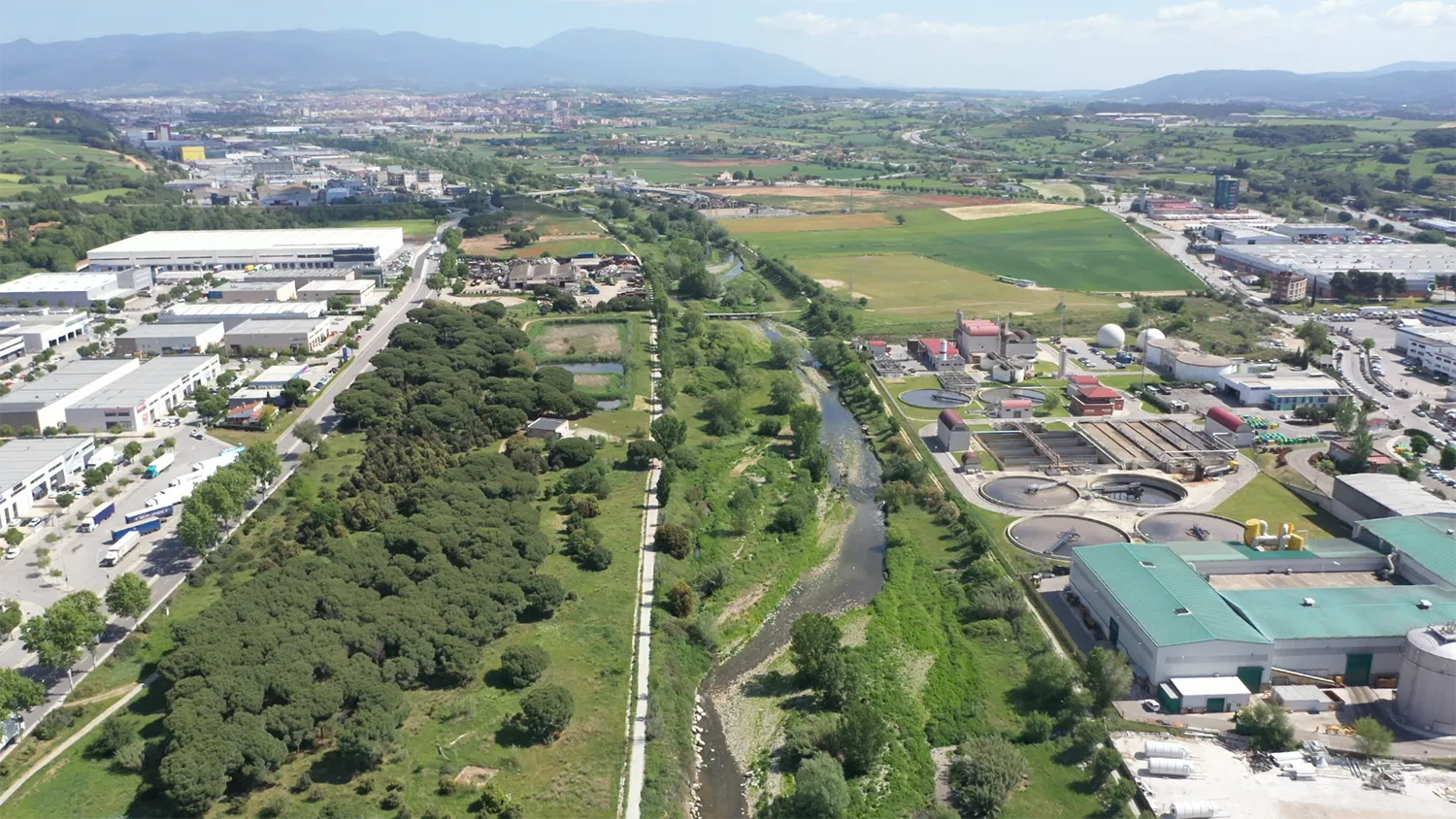
Pioneering Hybrid Water Reuse System
The Can Cabanyes constructed wetland operates as a pioneering hybrid water reuse system that integrates a 1-hectare surface flow constructed wetland with a mechanical reclamation plant. This nature-based solution (NBS) is designed to polish secondary effluent from the nearby Granollers Wastewater Treatment Plant (WWTP), operated by Consorci Besòs Tordera. The system currently produces over 10,000 m³ of reclaimed water annually. A key feature is its 8.5 km non-potable distribution network, which currently supplies around half of the water needed for both urban green space irrigation and street and sewerage maintenance.
History
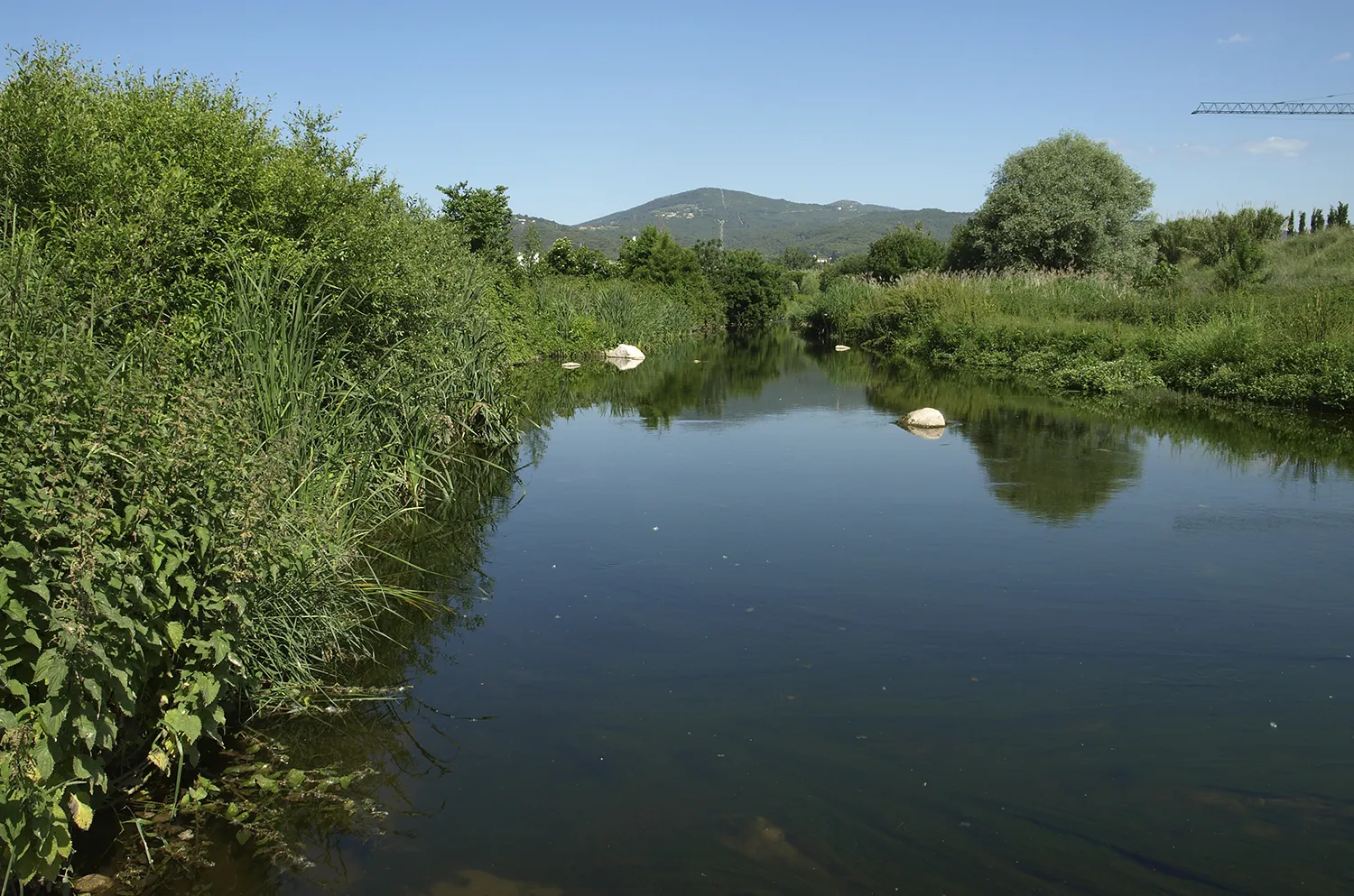
The system was put into operation in 2003, marking the beginning of a transformation of what was then a highly degraded peri-urban ecosystem near the Congost River. Before its restoration, the site was heavily impacted by industrial infrastructure, a highway, and an old landfill. The initial project required a comprehensive restoration plan that included closing the landfill, recovering river banks, and reclaiming pedestrian paths to create the current public park.
Main transformation phases:
2002-2003: Sealing the wetland basin with local soil compaction and planting high-density vegetation, such as Phragmites australis and Typha latifolia.
2004-2005: Facing ecosystem stabilization issues, where phytoplankton and zooplankton “blooms” caused temporary spikes in organic matter and suspended solids.
2008: Addition of a mechanical reclamation plant featuring disc filters and chlorine disinfection to meet stricter water quality standards for water reuse
The system matured over two decades with the successful integration of nature-based solutions and mechanical treatment that created the stable hybrid foundation used today.
Achievements
Can Cabanyes has proven that hybrid nature-based solutions are both reliable and highly efficient for urban water reuse. The system consistently meets the water quality standards set by the regional authority for key parameters, including pH, total suspended solids (TSS), and pathogens like E. coli, Legionella, and nematode eggs.
From an environmental and social perspective, the site has successfully transitioned from a degraded industrial area into a high-value peri-urban park integrated into the Natura 2000 network. It now serves as a vital ecological corridor, hosting species of special interest like the Mediterranean turtle (Mauremys leprosa) and a diverse range of bird populations.
Seasonal patterns (long-term data):
while ammonium removal is highly effective in warm months (64-87%), its efficiency significantly drops when water temperatures fall below 10°C.
Regarding microbiological quality:
approximate reduction of 2 logarithmic units in fecal coliforms, consolidating the role of the wetland as a pre treatment stage before conventional.
Beyond conventional pollutants:
the wetland removes over 95% of emerging contaminants such as ibuprofen and ketoprofen, although it is less effective against recalcitrant substances like carbamazepine.
Studies have confirmed the system’s excellence in removing human adenoviruses (HAdV), providing a critical health safety barrier.
Finally, a techno-economic evaluation confirmed the project’s sustainability, revealing that its positive externalities, such as environmental, educational, and recreational value (estimated at 1.25 €/m³), significantly outweigh the private operational costs of approximately 0.50 €/m³.
DECIRE-WATER activities
Now in 2026 the site is undergoing a major expansion set for completion by 2027, which includes a flooded forest, a second tertiary wetland and a bioremediation stream to showcase the potential scalability of reclaimed water for agricultural and urban uses.
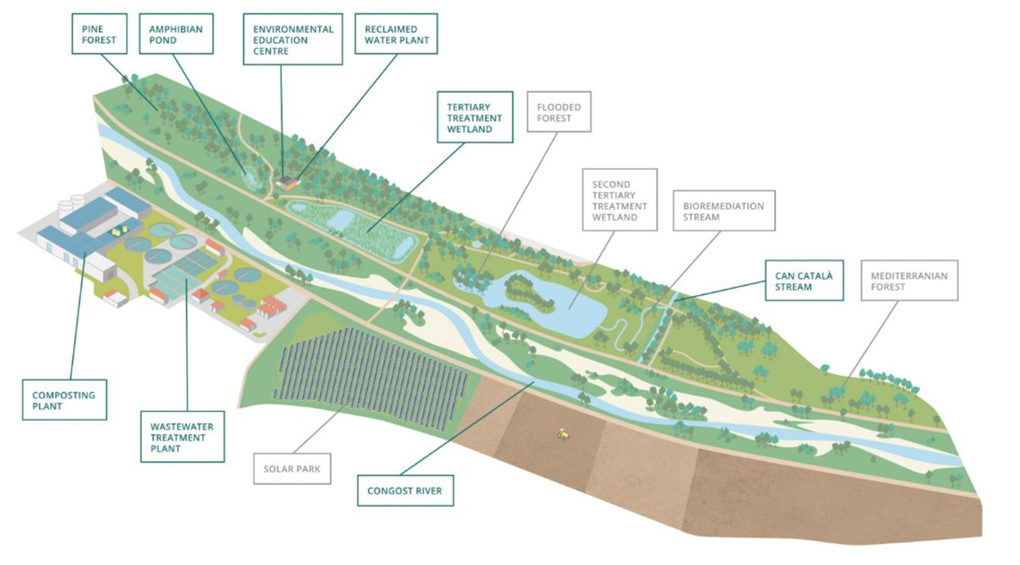
As a “lighthouse” demo site for the project, Can Cabanyes is pioneering the use of advanced real-time E. coli sensors to ensure the safe expansion of reclaimed water for agricultural and urban uses.
The primary goal is to develop an in-situ, real-time monitoring system capable of detecting fluctuations in water quality and providing early warnings of fecal contamination spikes. The sensing approach combines DNA-based (total bacteria) and RNA-based (specific bacterial targets) staining with flow cytometry and advanced data analysis.


Author: E. Gonzalez Flo