
When vision meets reality –
Demo 3 stakeholder workshop in Poland
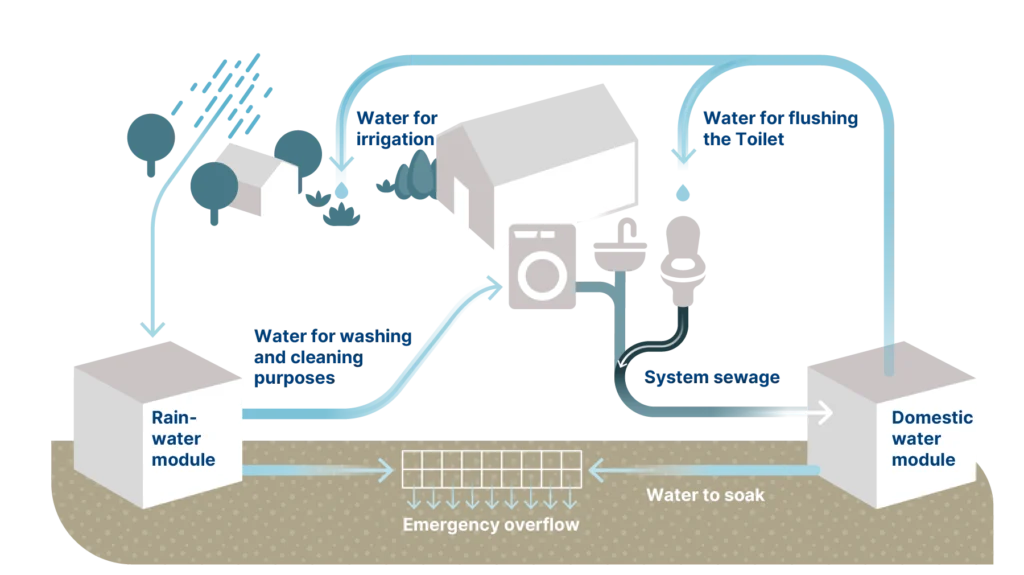
On 11 August, the first stakeholder workshop was organised by our Polish project partners ECOL UNICON, the company responsible for the the demo site in Gdansk and RetencjaPL, which is responsible for developing the decision-support tool for water policy within the DECIRE-WATER project. The workshop provided a platform for discussing the future of rainwater and greywater recovery systems in Poland, with a particular focus on the technologies being tested at demo site 3. These include the treatment and reuse of greywater for toilet flushing, as well as the purification of rainwater for everyday non-potable applications such as washing, cleaning, and laundry.
This first online workshop aimed to initiate actions towards reshaping the implementation of these water and wastewater recovery systems across all stages of the process, from obtaining the necessary permits, through ensuring user safety, to developing clear and coherent regulatory frameworks.
Bringing together key stakeholders
Fourteen stakeholders attended this online workshop, representing a wide range of organisations, such as municipal water supply companies, city councils, sustainable building certification auditors and systems designers. Among the participants were also representatives of the Polish Water Chamber and the Polish Green Building Council (PLGBC).
The diversity of the participants enabled a rich, multi-perspective discussion, with each stakeholder contributing insights from their respective sector. This exchange helped identify challenges and opportunities that are often overlooked when viewed from a single organisational perspective. To facilitate the discussions, the workshop employed the World Café method, which was adapted for an online format. This approach enabled stakeholders from outside Gdańsk to participate while supporting wider engagement with the DECIRE-WATER project. Through the use of breakout sessions and interactive Mentimeter boards, participants were able to share their ideas openly and engage in focused discussions within smaller groups.
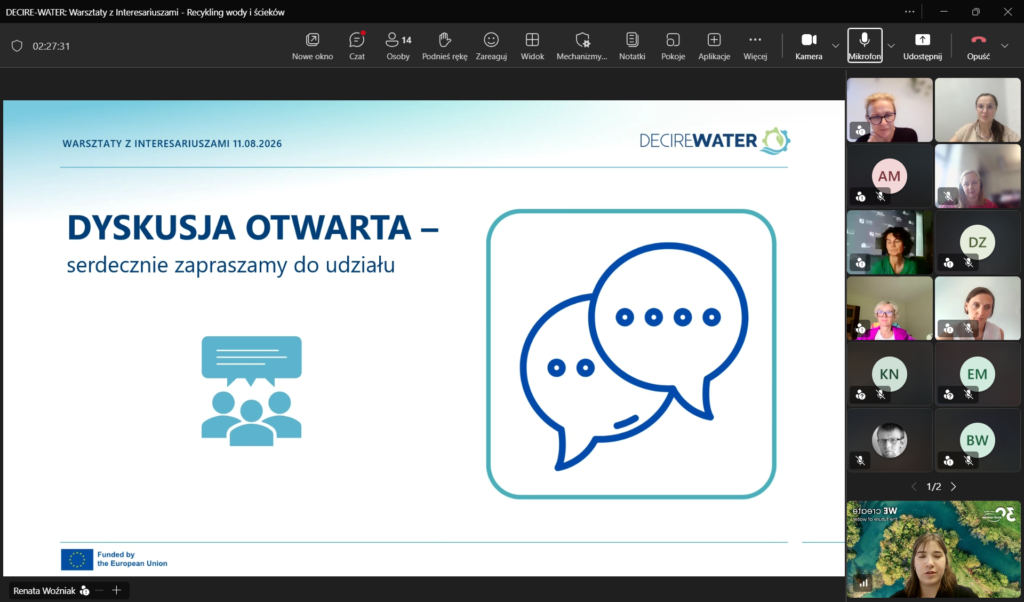
The discussions were highly engaging, with participants actively contributing throughout the session, and focusing on the following key topics:
- Legal and regulatory aspects
- Economic challenges and opportunities
- Integration of water recovery systems within urban infrastructure
- Social acceptance and user safety
- Cross-sector collaboration
Regulatory Challenges Remain a Major Barrier
A key conclusion was that the lack of clear and consistent regulations remains one of the main barriers to the wider adoption of water recovery systems in Poland. This challenge is particularly evident in public buildings, where ensuring user safety and maintaining a high level of system reliability are essential requirements.
Financial considerations are Key
Participants also highlighted the financial aspects of implementing water and wastewater reuse systems. While the initial investment can be significant, it was noted that growing demand for such solutions could lead to the introduction of dedicated funding schemes and financial incentives in the future, helping to improve their economic viability.
From local action to national policy
The role of local authorities in promoting more sustainable water use was another important topic of discussion. Participants pointed out that municipalities already have the capacity to introduce measures aimed at conserving drinking water. For example, restrictions can be imposed on the use of tap water for garden irrigation during periods of drought. However, stakeholders agreed that broader uptake of water recovery technologies will require action at the national level. Clear regulatory frameworks and technical guidelines are needed to provide certainty for designers, investors, and end users, and to encourage greater interest and confidence in these solutions.
Building public acceptance of water reuse
Participants also highlighted the importance of public awareness campaigns and educational initiatives in fostering understanding and acceptance of innovative water recovery technologies. Raising public awareness is particularly important in the context of wastewater reuse, where concerns about safety and the use of treated water remain widespread. Participants emphasised that clear communication about treatment processes, water quality standards, and the benefits of water reuse is essential for building public trust and encouraging the adoption of these solutions.
Key outcomes and next steps
The workshop provided valuable insights into the practical needs and challenges faced by professionals working in the water sector. It enabled the identification of areas requiring clarification regarding regulations, and confirmed that water recovery technologies have the potential for large-scale implementation. The meeting also strengthened cooperation among institutions involved in water management across Poland.
The next steps include incorporating the findings into the work on the decision-support tool being developed by RetencjaPL and further consultations with the industry to optimise the demonstrated system in Poland, particularly in terms of costs related to energy consumption.
Author: G. Pawelkiewicz